THE BLUE PRINT
  • Home
  • Case Studies
  • Magazine
  • Home
  • Case Studies
  • Magazine
Search

Pick the best option with this packaging tape guide

Updated January 9, 2025
By Paige Buisman | Global Supplier Compliance Manager
Packaging tape
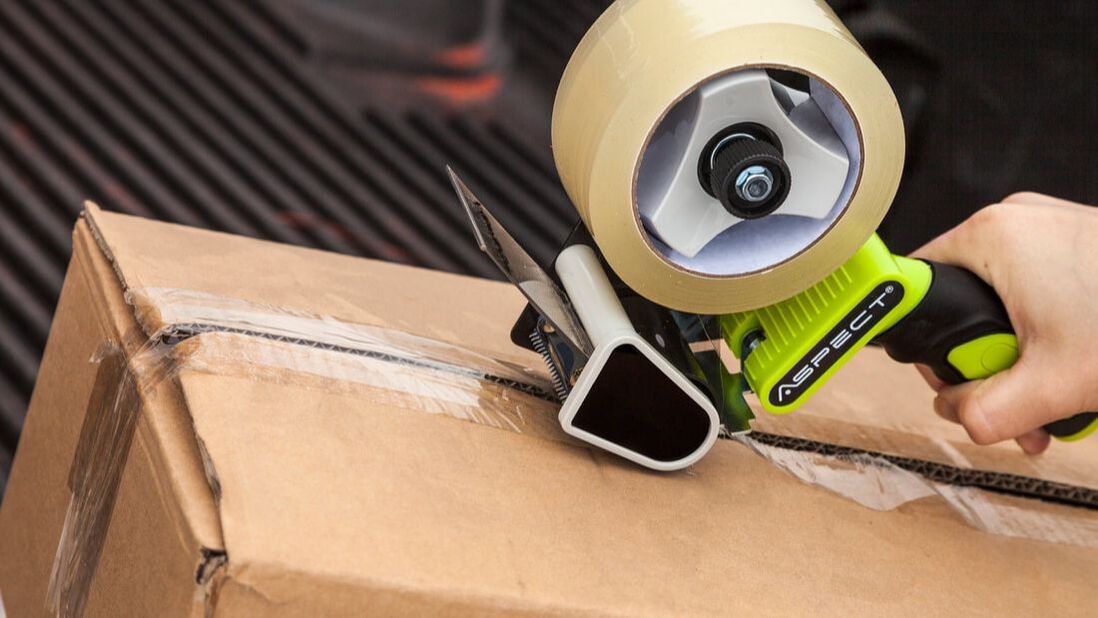
​When it comes to packaging tape, there are two types you can choose from: pressure sensitive or water activated. Before we dive into those though, here’s a counter-intuitive fact for you. Using a wider tape can actually reduce the amount of tape used in the long run. 
​
​
Pressure sensitive
For the pressure-sensitive adhesives, hot melt and acrylic make up most of the market, but there are three types in this field.
  • Hot Melt
  • Acrylic
  • Natural Rubber
 
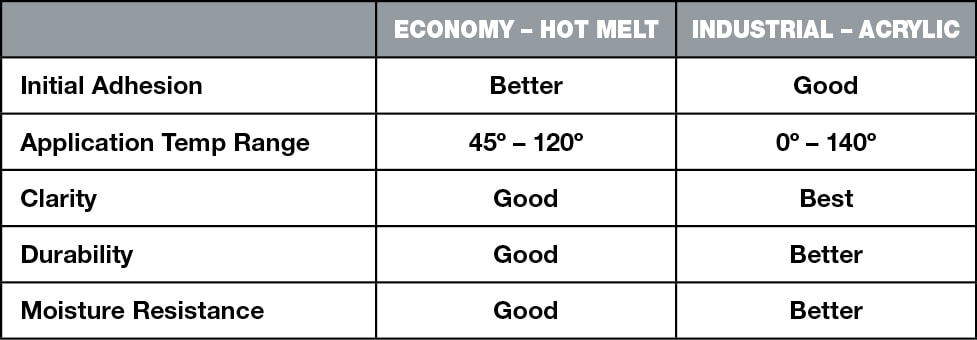
Hot Melt
  • Offers flexibility with the widest range of applications
  • Offers strong adhesion, tensile strength, and easy unwind properties
  • Economical choice for repetitive, high-volume packaging
  • Provides extra elongation for sealing irregular shapes
  • Keeps adhesion performance over time
  • Commonly called “economy carton sealing tape” or “economy grade”
 
Acrylic
  • Provides a secure seal in all temperatures (maintains integrity in widest temperature range)
  • Resistance to weathering and aging, preventing yellowing of the tape
  • Provides smooth, consistent release and is best for long-term storage when shelf life is important
  • Doesn’t hinder barcode scanning
  • Offers good moisture resistance
  • Commonly called “industrial carton sealing tape”
Adhesion level table
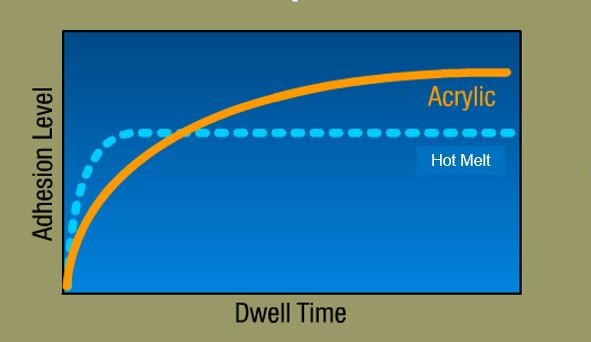
Adhesion level chart
Natural
  • Most aggressive adhesive available
  • Is good for applications such as highly recycled corrugated, humid environments, and even extreme temps.
  • White natural rubber is the least popular but is still being used quite a bit in the industry
  • Made with PVC or polypropylene material

​Water activated
Reinforced Water-Activated Tape
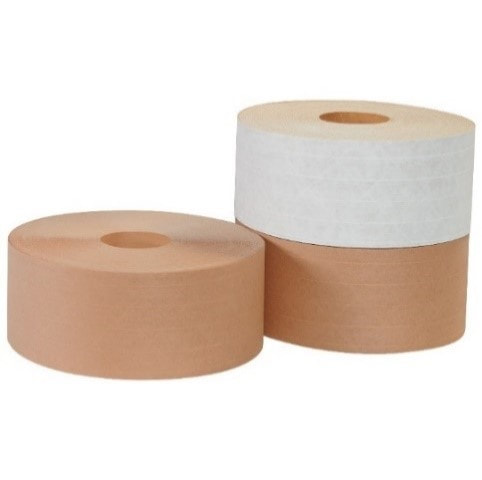
  • Most secure way to seal a box
  • Made of strong fiberglass yarns strategically bonded between sheets of paper to provide an extra margin of strength
    • The closer the yarn is the better
    • May also use a crisscross pattern
  • Tamper proof  
  • Excellent flexibility for sealing carton corners and irregular surfaces
  • Not affected by extreme hot or cold temperatures
  • Needs moisture to stick, typically applied with a paper tape or a “gummed tape” machine
Reinforced water-activated tape
Non-Reinforced Water-Activated Tape
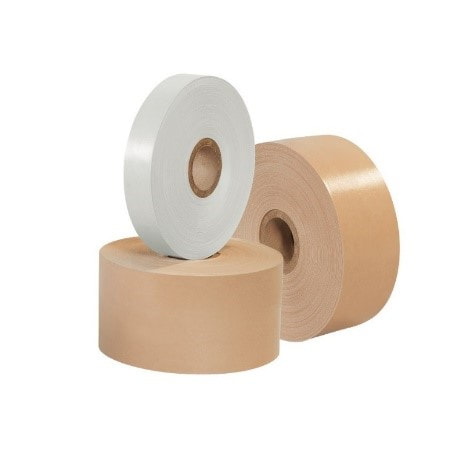
  • Water-activated paper tape that does not have filaments
  • 100% biodegradable and repulp able
  • Ideal for paper splicing
  • Recommended for cartons that will be packed in master cartons (inner packages)
  • Needs moisture to stick, typically applied with a machine
Non-reinforced water-activated tape
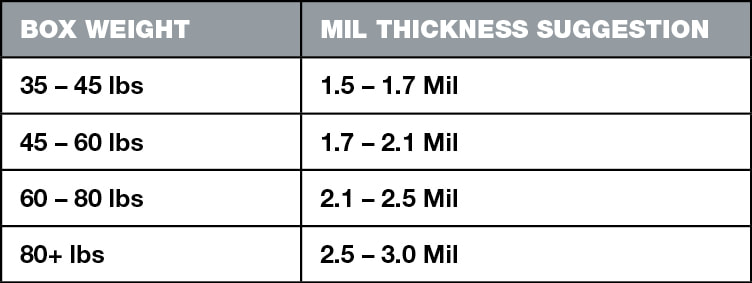
Mil thickness matters
  • The heavier a box is directly affects the grade of tape you will need. This means, you need to increase the mil thickness of the adhesive you use.
Mil thickness table
Please note: the higher the mil thickness, the better the performance of the tape. The above are just suggestions.
Vertical Divider

You may also like: 

Picture
​How to Maintain Your Floors
Picture
Protecting your team's vision: Why proper eyewear is crucial for workplace safety​
Picture
Extension Cord Reference Guide​
Like what you're seeing here? Subscribe to the Blue Print for FREE and get the magazine sent right to your address.
Subscribe

Got feedback? Email us at
[email protected]
WHERE INDUSTRY MEETS INNOVATION
Sign up for the latest info and our free magazine
Sign Up
Company 
About Us
Careers
Responsible Sourcing 
ESG
​Press Room
Connect
Contact Us
Locations 
Certifications
Governance
Accessibility
Legal Information 
Privacy Statement 
Resources
Fastenal.com
​Fastenal Canada
Fastenal Mexico
Fastenal Europe
​Fastenal Brazil
Fastenal China
​Blue Lane Freight
Vehicles for Sale 
Emergency Response
Copyright © 2026 Fastenal Company. All Rights Reserved.
  • Home
  • Case Studies
  • Magazine