THE BLUE PRINT
  • Home
  • Case Studies
  • Magazine
  • Home
  • Case Studies
  • Magazine
Search

How to handle sling inspections

Updated November 27, 2024
By Jacob Dixon | Former Supplier Development Manager - Lifting & Rigging
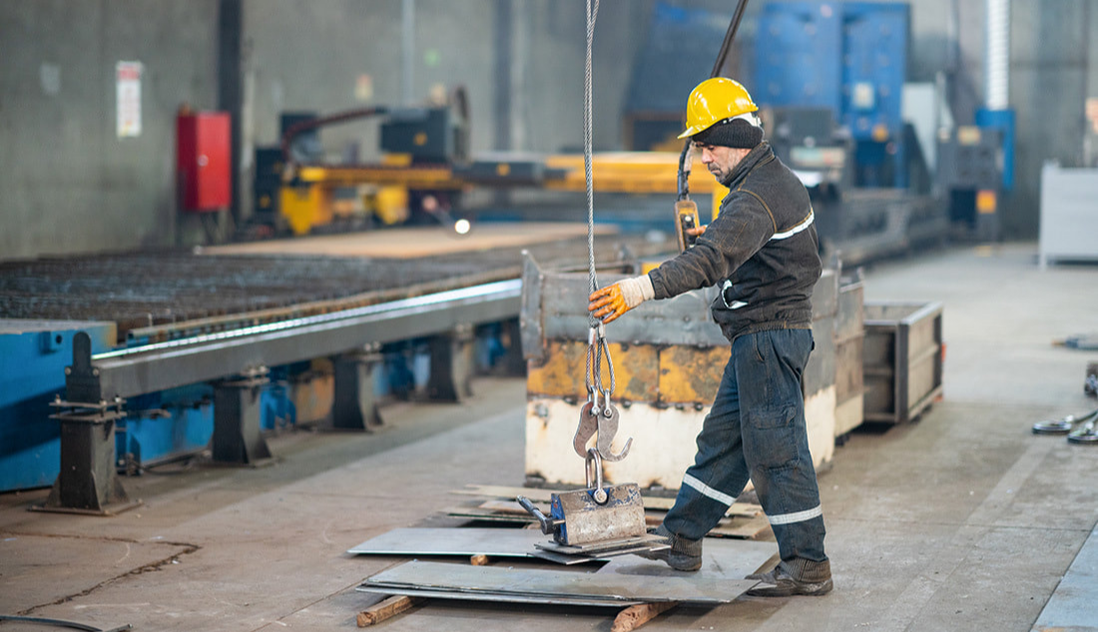
Man moving item with hoist
Whether it’s a web, chain, round, or wire rope sling, it’s critical to have it inspected correctly by end users to ensure their safety. Follow this guide to know the best steps for inspection. 

Types of slings
Chain slings are made from alloy steel. They are durable, adjustable length, and more heat resistant than nylon and web slings. The downside is that they are heavy and also not very useful for heavy lifting. Only alloy steel chain in grade 8, 10, or 12 can be used lifting.

Web slings are typically made of a nylon or polyester material. Stretch percentage depends on the material with nylon having a 10% stretch compared to a 6% stretch for polyester. In some cases, less stretch is better. Polyester is typically less expensive. Web slings are light weight and easy to handle.

Round slings are typically made of polyester material and are known for being the most worker friendly due to having a low rigging preparation time. Round slings are popular because they are light weight and easy to handle. Plus, they are somewhat repairable, since you can patch the jacket as long as the yarns inside are not damaged.

Wire rope slings are a very durable, strong, abrasion resistant sling and can get to much higher capacities than chain slings; however, they are not as easy to handle as synthetic web slings and round slings. Wire rope slings can be placed in a vertical, choker, or basket hitch. 

NOTE: Never exceed the working load limit of any sling. 

We can help with inspections!

​
Standard inspection requirements across all slings per ASME B30.9
  • Visual inspection for damage shall be performed by the user or designated person each day or shift the sling is used.
  • A complete inspection for damage shall be performed periodically by designated person, at least annually.
  • ​Written records of most recent periodic inspection shall be maintained.  ​

Rejection criteria
  • Missing or illegible sling identification or evidence of heat damage
  • If the sling is knotted
  • Fittings that are pitted, corroded, cracked, bent, twisted, gouged, or broken; other conditions, including visible damage, that caused doubt as to the continued use of the sling

​Inspection standards for each sling type
Wire rope slings - check for the following:
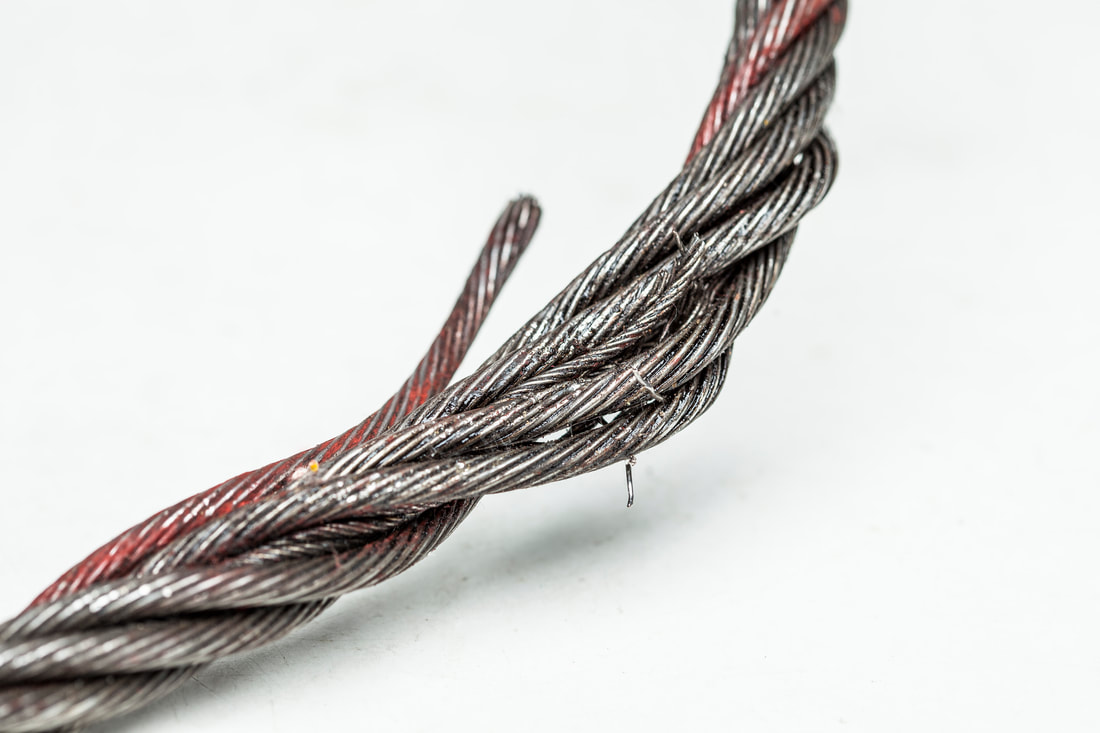
  • Excessive broken wires, for strand – laid and single part slings, ten randomly distributed broken wires in one rope lay or five broken wires in one strand in one rope lay
  • Severe localized abrasion or scraping, kinking, crushing, bird caging
  • Any other damage to the rope structure
  • Severe corrosion of the rope or end attachments
Example of a broken strand
​Example of a broken strand
Web slings - check for the following:
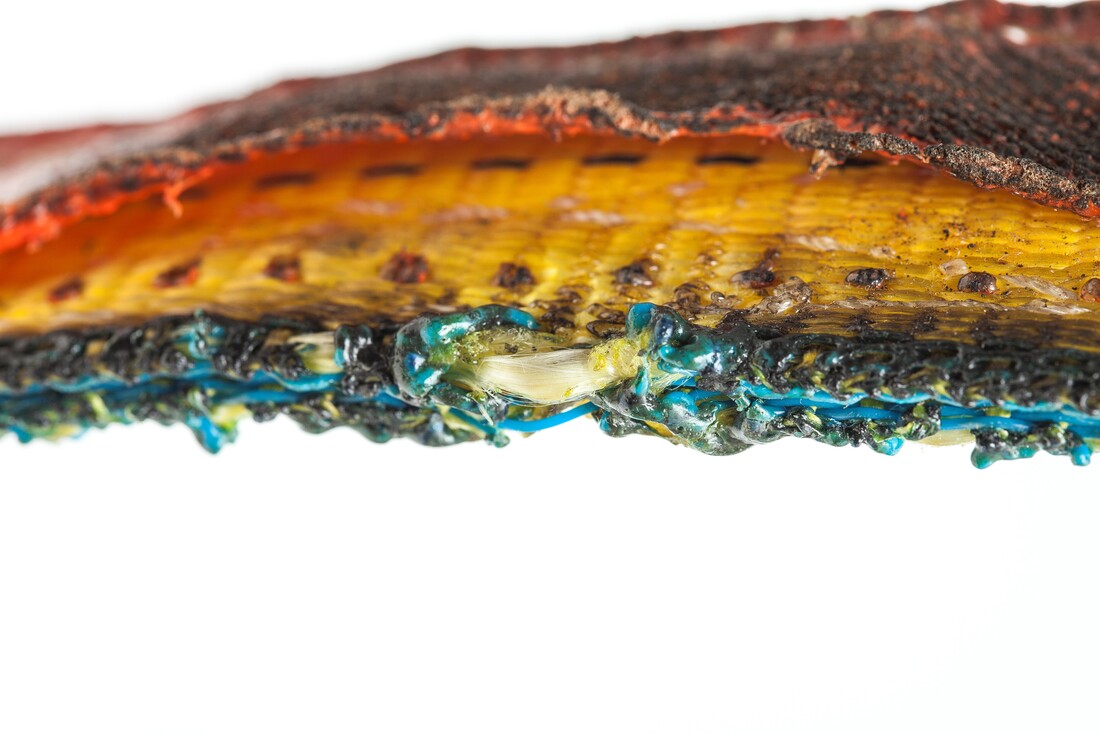
  • Acid or caustic burns
  • Melting or charring
  • Holes, tears, cuts, or snags
  • Broken or worn stitching in load-bearing splices
  • Excessive abrasive wear
  • Discoloration and brittle or stiff areas on any part of the slings, which may mean chemical or ultraviolet/sunlight damage
Example of heat damage
Chain slings - check for the following:
  • Cracks of breaks
  • Excessive wear, nicks, or gouges
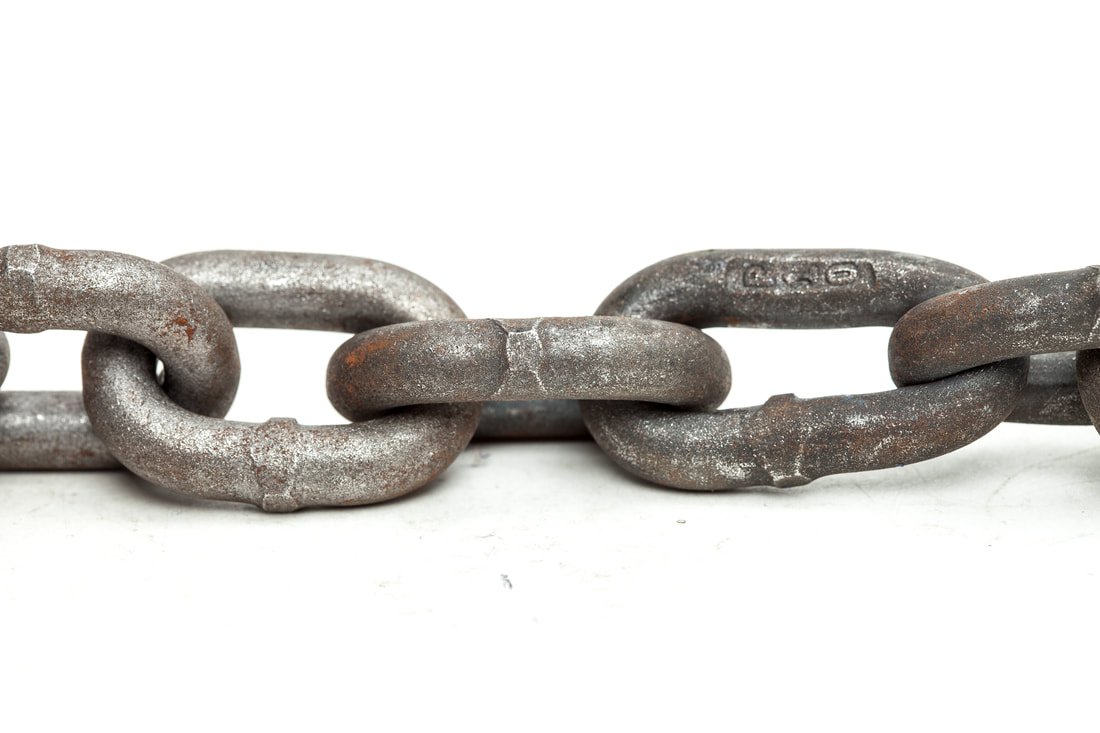
  • Stretched chain links or components
  • Bent, twisted, or deformed chain links or components
  • Excessive pitting or corrosion
  • Lack of ability of chain or components to hinge freely
  • Weld spatter
Example of stretched chain link
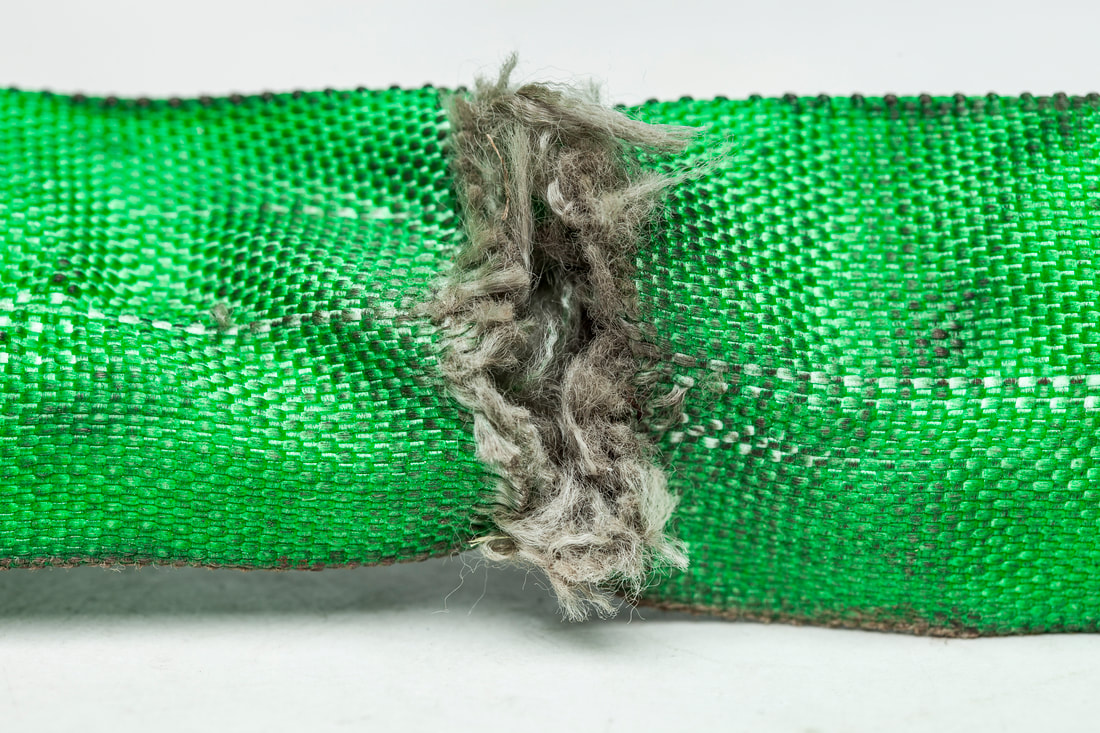
Round slings - check for the following:
  • Acid or caustic burns
  • Evidence of heat damage
  • Holes, tears, abrasive wear, or snags that expose the core yarns
  • Broken or damage core yarns
  • Weld spatter that exposes yarns
  • Discoloration and brittle or stiff areas on any part of the slings, which may mean chemical or other damage
Example of cut exposing core yarn


​Sling Inspection is offered through Fastenal’s Industrial Services. Please contact [email protected] about these services.
Vertical Divider

You may also like:

Picture
​Turning a Dilapidated Facility Into a Manufacturing Powerhouse
Picture
Tech in Supply Chains​
Picture
​​Making connections: How fasteners can improve quality and control costs
Sling Inspection is offered through Fastenal’s Industrial Services. Please contact [email protected] about these services.
​
Like what you're seeing here? Subscribe to the Blue Print for FREE and get the magazine sent right to your address.
Subscribe
WHERE INDUSTRY MEETS INNOVATION
Sign up for the latest info and our free magazine
Sign Up
Company 
About Us
Careers
Responsible Sourcing 
ESG
​Press Room
Connect
Contact Us
Locations 
Certifications
Governance
Accessibility
Legal Information 
Privacy Statement 
Resources
Fastenal.com
​Fastenal Canada
Fastenal Mexico
Fastenal Europe
​Fastenal Brazil
Fastenal China
​Blue Lane Freight
Vehicles for Sale 
Emergency Response
Copyright © 2026 Fastenal Company. All Rights Reserved.
  • Home
  • Case Studies
  • Magazine
