THE BLUE PRINT
  • Home
  • Case Studies
  • Magazine
  • Home
  • Case Studies
  • Magazine
Search

How to beat the heat

Updated May 5, 2023
By Brent Roeder | Vice President of Sales
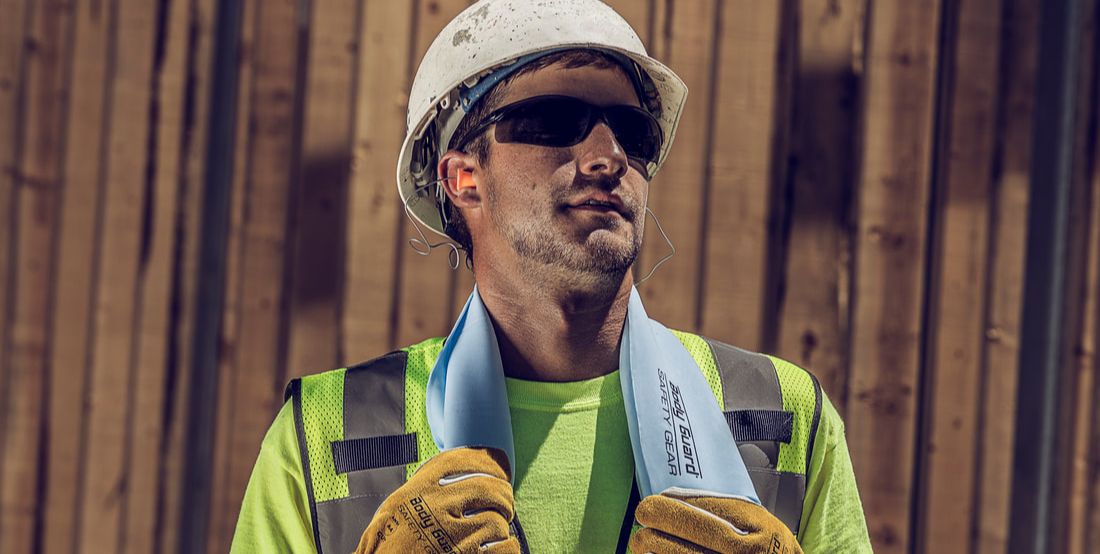
Construction worker with cooling towel
With the summer months, comes summer heat. Temperatures will rise and so will the dangers to employees. Heat stress and heat stroke are two common problems that jobsites and facilities need to be ready to handle.

NEXT STEP: To help battle the warmer months, a proper "Beat the Heat" program should be developed, planned, and executed before it gets too hot.​


Factors in heat stress
The ambient temperature is only one factor that contributes to heat exposure. A mix of environmental and work factors all contribute to the actual heat index felt by a worker. Take into account these factors when analyzing heat-related dangers for employees.
  • Temperature
  • Humidity
  • Wind or Air Movement
  • Physicality of Labor
  • Length of Exposure
  • Frequency of Hydration
  • Clothing​

​Know the signs
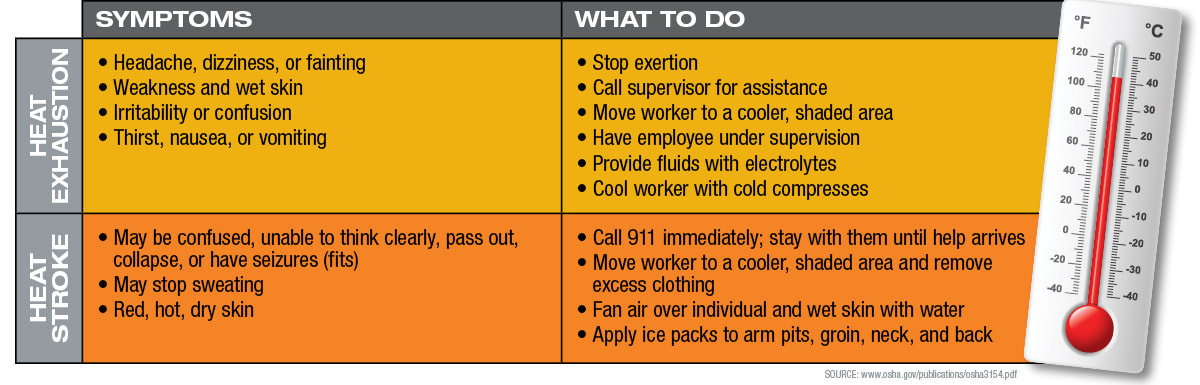
Clear warnings let you know when an employee is fighting heat-related issues. Educate everyone within your facility or on your jobsite.​
SYMPTOMS WHAT TO DO HEAT EXHAUSTION • Headache, dizziness, or fainting • Weakness and wet skin • Irritability or confusion • Thirst, nausea, or vomiting • Stop exertion • Call supervisor for assistance • Move worker to a cooler, shaded area • Have employee under supervision • Provide fluids with electrolytes • Cool worker with cold compresses HEAT STROKE • May be confused, unable to think clearly, pass out, collapse, or have seizures (fits) • May stop sweating • Red, hot, dry skin • Call 911 immediately; stay with them until help arrives • Move worker to a cooler, shaded area and remove excess clothing • Fan air over individual and wet skin with water • Apply ice packs to arm pits, groin, neck, and back
How to protect workers
It's important to protect workers before a heat wave hits. Use these tips to ensure the health and safety of your team.
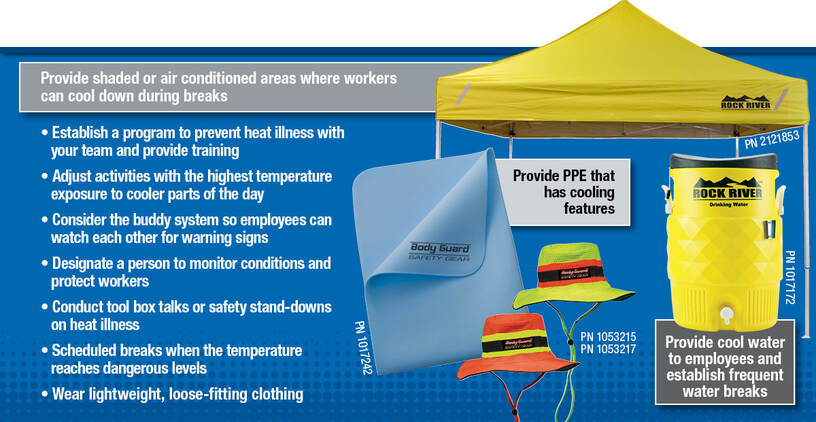
Provide shaded or air conditioned areas where workers can cool down during breaks Establish a program to prevent heat illness with your team and provide training • Adjust activities with the highest temperature exposure to cooler parts of the day • Consider the buddy system so employees can watch each other for warning signs • Designate a person to monitor conditions and protect workers • Conduct tool box talks or safety stand-downs on heat illness • Scheduled breaks when the temperature reaches dangerous levels • Wear lightweight, loose-fitting clothing Provide cool water to employees and establish frequent water breaks Provide PPE that has cooling features

​Looking for more? Here's how to increase PPE compliance
Vertical Divider
Like what you're seeing here? Subscribe to the Blue Print for FREE and get the magazine sent right to your address.
Subscribe
WHERE INDUSTRY MEETS INNOVATION
Sign up for the latest info and our free magazine
Sign Up
Company 
About Us
Careers
Responsible Sourcing 
ESG
​Press Room
Connect
Contact Us
Locations 
Certifications
Governance
Accessibility
Legal Information 
Privacy Statement 
Resources
Fastenal.com
​Fastenal Canada
Fastenal Mexico
Fastenal Europe
​Fastenal Brazil
Fastenal China
​Blue Lane Freight
Vehicles for Sale 
Emergency Response
Copyright © 2025 Fastenal Company. All Rights Reserved.
  • Home
  • Case Studies
  • Magazine